Discover the biblical meaning of Mary’s divine calling in Luke 1:35. Learn why she was overshadowed by the power of the Most High and chosen by God.
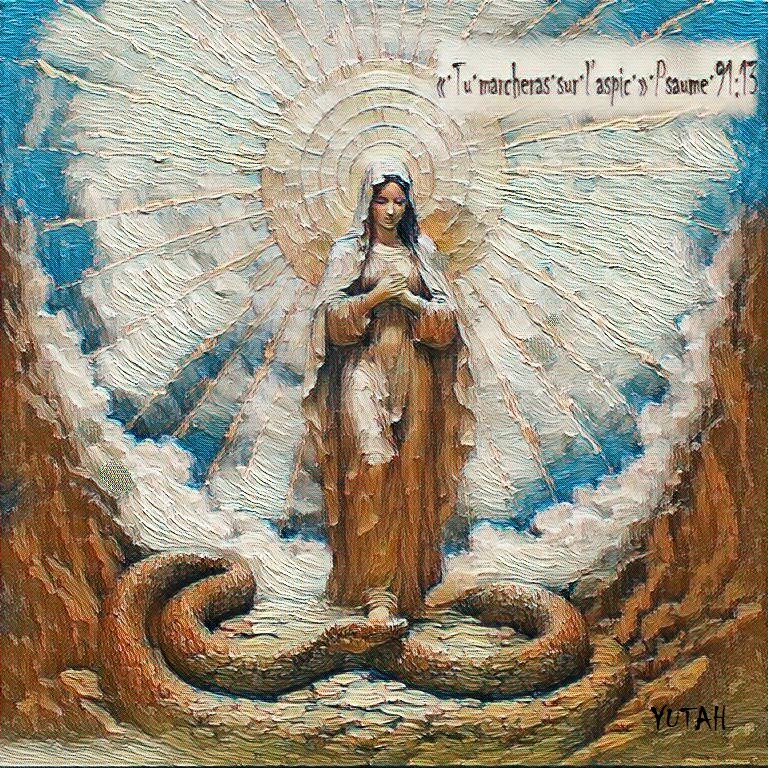
Psalm 91 is one of the most beloved chapters in the entire Bible. It has been prayed in times of danger, whispered in hospital rooms, and declared in moments of uncertainty. Many people know it as a “psalm of protection,” but is that all it is? Or does Psalm 91 carry a deeper prophetic meaning—one that connects to Yeshuah and even to Mary?
In this article, we will explore the meaning of Psalm 91, its key Hebrew expressions, and its powerful connection to the New Testament. Rather than approaching it through denominational theology, we will look directly at the biblical text and allow Scripture to interpret Scripture.
Understanding the Core Message of Psalm 91
Psalm 91 begins with one of the most powerful declarations in the Bible:
“He who dwells in the secret place of the Most High shall abide under the shadow of the Almighty.”
(Source: Bible Gateway – Psalm 91:1)
Two expressions stand out:
- “Most High” (Hebrew: Elyon)
- “Shadow of the Almighty” (Hebrew: Tzel Shaddai)
The psalm is not merely offering comfort. It describes a spiritual position—dwelling, abiding, remaining under divine covering.
The Hebrew word for “shadow” (tzel) does not imply darkness. It suggests proximity and protection, like standing under the shade of a powerful shelter. Throughout Scripture, shadow imagery represents divine presence (see Exodus 40:34–35).
Psalm 91 continues with extraordinary promises:
- Deliverance from danger
- Protection from pestilence
- Angelic guardianship
- Victory over serpents
- Long life
- A vision of divine salvation
These promises raise an important question: Has anyone in Scripture fully lived this psalm?
“Because He Knows My Name” – The Key to Psalm 91
Verse 14 is central:
“Because he has set his love upon Me, therefore I will deliver him; I will set him on high, because he has known My Name.”
The Hebrew phrase is:
“Ki yada Shemi” – “because he knows My Name.”
In biblical thought, knowing God’s Name is not about pronunciation alone. The Hebrew verb yada means experiential knowledge—relationship, covenant intimacy, recognition of authority.
Throughout Scripture, God reveals multiple Names:
- YHVH
- Elohim
- El Elyon
- El Shaddai
- Ehyeh (Exodus 3:14)
Psalm 100:3 declares:
“Know that YHVH, He is Elohim.”
(Source: Bible Gateway – Psalm 100:3)
The psalmist connects knowledge of the Name with elevation and deliverance. Then Psalm 91 ends with a striking promise:
“I will show him My salvation.” (Psalm 91:16)
The Hebrew word for salvation here is “Yeshuati”—“My salvation.”
This word comes from the root Y-Sh-A, the same root from which the name Jesus (Yeshua) is derived. For deeper Hebrew lexical study, see the entry for yeshuah at Blue Letter Bible.
The connection is textual, not symbolic. The word used in Psalm 91 for “salvation” is linguistically related to the name given to Yeshuah in Matthew 1:21.
Luke 1:35 and the Shadow of the Most High
Now consider Luke 1:35:
“The Holy Spirit will come upon you, and the power of the Most High will overshadow you.”
(Source: Bible Gateway – Luke 1:35)
The phrase “Most High” echoes Psalm 91’s Elyon. The word “overshadow” corresponds conceptually to the Hebrew idea of dwelling under divine shadow.
The pattern is striking:
- Psalm 91: Dwelling under the shadow of Elyon
- Luke 1: The power of Elyon overshadows Mary
In Psalm 91, the one who dwells under the shadow ultimately “sees” God’s salvation. In Luke 1, Mary is overshadowed by the power of the Most High and later beholds the incarnate salvation—Yeshuah.
This parallel has led many readers to ask whether Psalm 91 reaches a prophetic fulfillment in the life surrounding Yeshuah’ birth.
The Temptation in the Wilderness: Psalm 91 and Yeshuah
In Matthew 4:6, during the temptation in the wilderness, Satan quotes Psalm 91 directly:
“He shall give His angels charge over You… in their hands they shall bear You up.”
(Source: Bible Gateway – Matthew 4:6)
This is significant. The psalm is applied to Yeshuah in the New Testament itself. However, Yeshuah refuses to manipulate the promise. He responds with another Scripture, demonstrating that divine promises are not magical formulas but relational realities.
Yeshuah’s response (Matthew 4:7)
“It is written again, ‘You shall not tempt the LORD your God.’”
(Matthew 4:7, NKJV)
This comes directly from:
“You shall not tempt YHVH your Elohim.”
(Deuteronomy 6:16)
This confirms that Psalm 91 is not superstition. It is covenantal. It is lived, not used.
“You Shall Tread Upon the Serpent”
Psalm 91:13 states:
“You shall tread upon the lion and the cobra.”
This resonates with Genesis 3:15, where God speaks of the seed of the woman crushing the serpent’s head.
(Source: Bible Gateway – Genesis 3:15)
The thematic connection is undeniable:
- Serpent imagery
- Victory over evil
- A descendant of a woman
Psalm 91 does not explicitly mention a Messiah. Yet its imagery aligns closely with themes later associated with Jesus in the New Testament.
Exodus and “The Salvation of the Lord”
In Exodus 14:13, Moses declares:
“Stand still, and see the salvation of the Lord.”
(Source: Bible Gateway – Exodus 14:13)
The Hebrew again uses yeshuah.
Later in Exodus 15:2:
“The Lord is my strength and my salvation.”
The Bible consistently presents salvation not merely as an event but as a manifestation of God Himself. When Psalm 91 says, “I will show him My salvation,” it fits into this broader biblical pattern.
Is Psalm 91 Only About Protection?
While Psalm 91 is often prayed for protection, its structure suggests something deeper:
- Dwelling under Elyon
- Knowing the Name
- Divine presence in trouble
- Deliverance
- Revelation of salvation
It is a progression—from relationship to revelation.
The psalm is not a charm against danger. It is an invitation into covenantal closeness.
Mary as an Archetype of Faith
In Luke’s Gospel, Mary demonstrates trust, surrender, and obedience. When told she would conceive through divine overshadowing, she responds:
“Let it be to me according to your word.”
(Source: Bible Gateway – Luke 1:38)
Whether one sees Psalm 91 as directly prophetic or thematically fulfilled, Mary embodies the posture described in the psalm:
- Dwelling in trust
- Receiving divine covering
- Witnessing God’s salvation
The Broader Biblical Context
For historical and literary background on the Psalms, consult:
- Encyclopaedia Britannica – Book of Psalms
- Stanford Encyclopedia of Philosophy – Biblical Interpretation
These sources provide broader academic insight into how biblical texts are interpreted across traditions.
Final Reflection: Seeing God’s Salvation
Psalm 91 ends not with danger, but with vision:
“I will show him My salvation.”
The Hebrew structure emphasizes personal revelation.
The psalm moves from shadow to sight.
From dwelling to seeing.
From knowing the Name to beholding salvation.
Whether read devotionally, prophetically, or spiritually, Psalm 91 invites the reader into a relationship where divine presence becomes lived reality.
It is not magic.
It is not superstition.
It is covenant.
And it calls every reader to ask:
Do I dwell under the shadow of the Most High?
Do I know His Name?
Am I positioned to see His salvation?
Alexandre YOUTA . The author